
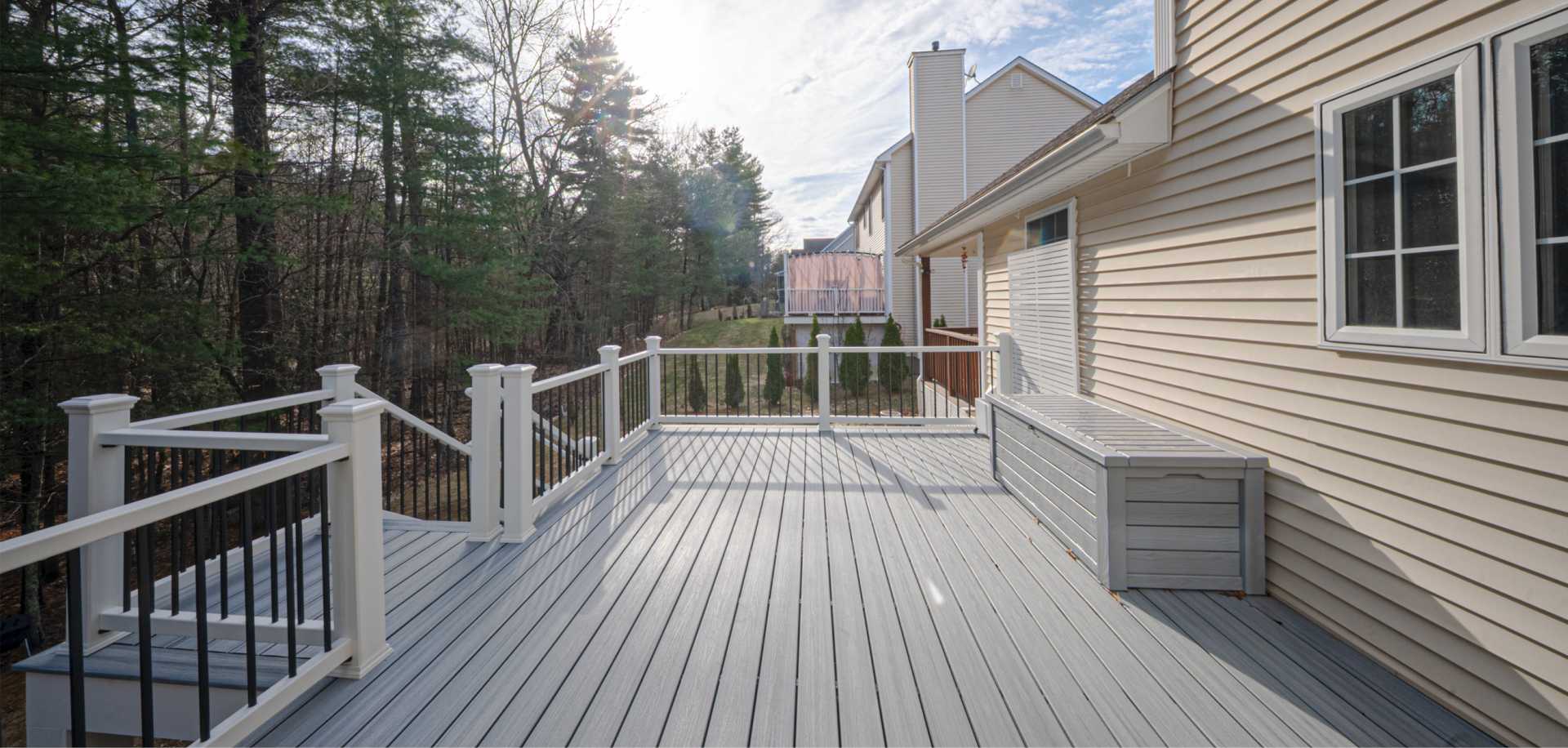
Composite or wood? It's the question we hear on almost every deck consultation in Massachusetts. Both build a great deck when done right. Both fail faster than they should when done wrong. Here's an honest comparison for New England homeowners.
Composite vs. Wood: Side-by-Side Comparison
| Factor | Composite (Trex, Azek, Fiberon) | Pressure-Treated Wood | Cedar / IPE |
|---|---|---|---|
| Material Cost | $8 – $15/sq ft | $3 – $6/sq ft | $6 – $25/sq ft |
| Installation Cost | $7 – $12/sq ft | $5 – $9/sq ft | $8 – $14/sq ft |
| 10-Year Maintenance | Minimal (wash only) | High (stain, seal annually) | Medium (oil or seal every 2–3 years) |
| Lifespan | 25–50 years | 10–20 years (with maintenance) | 20–40 years |
| Freeze-Thaw Performance | Excellent | Fair (can warp, check, crack) | Good to Excellent |
| Warranty | 25–50 years (most brands) | None / limited | None |
Why Composite Wins in Massachusetts and New Hampshire
New England's climate is harder on decks than most of the country. Freeze-thaw cycles cause wood to expand and contract, working fasteners loose, cracking boards, and allowing moisture infiltration. Composite decking, especially capped composite, handles these cycles without the structural fatigue that wood accumulates over years.
The real cost comparison isn't material price — it's total cost of ownership. A pressure-treated deck may cost $15,000 to build but require $1,000 to $2,000 in annual sealing, staining, and repairs. A composite deck may cost $22,000 to build and require virtually nothing beyond an annual wash. Over 15 years, the composite deck often costs less.
When Wood Still Makes Sense
Wood isn't always the wrong answer. If you're building a deck you plan to replace in 10 years, or working with a tight immediate budget, pressure-treated wood is a legitimate choice — as long as you maintain it properly. Cedar and IPE offer natural beauty that composite cannot replicate for homeowners who value that aesthetic.
IPE (Brazilian hardwood) deserves specific mention: it's extraordinarily hard, naturally resistant to insects and rot, and lasts 40+ years with proper maintenance. It's also significantly more expensive than composite. For clients who want natural wood performance in New England, IPE is the only wood we recommend without reservation.
What About the Environmental Argument?
Composite decking is made primarily from recycled wood fiber and plastic. The manufacturing process uses more energy than milling lumber. However, because composite lasts 2 to 3 times longer than wood and requires no chemical sealers, the long-term environmental impact is generally lower. This debate continues in the industry — we don't think it's a deciding factor either way for most homeowners.
What We Install and Why
At Lumi, we install both composite and wood decks. We work with Trex, TimberTech, and Fiberon on the composite side — the three brands with the strongest track records in New England's climate and the most reliable warranty support. On the wood side, we use pressure-treated lumber for structural framing (always) and cedar or IPE for decking boards when clients prefer natural wood.
Frequently Asked Questions
Does composite decking get hot in the Massachusetts summer?
Capped composite decking can run 10 to 15 degrees warmer than air temperature in direct sun. If you have south or west-facing exposure with heavy sun, choose lighter composite colors or consider a pergola for shade. Most premium composites now use capping technology that reduces heat retention significantly compared to older products.
Can I install composite decking over my existing wood deck?
Sometimes. If the existing frame is structurally sound, properly fastened, and meets current code, composite decking can go over it. We assess the existing structure before recommending this — decking over a failing frame just creates an expensive problem.
What composite decking brands do you install?
We work with Trex, TimberTech, and Fiberon — the three brands with the strongest track records in New England and the most reliable warranty support. We guide you through specific product lines based on your budget and performance expectations.