
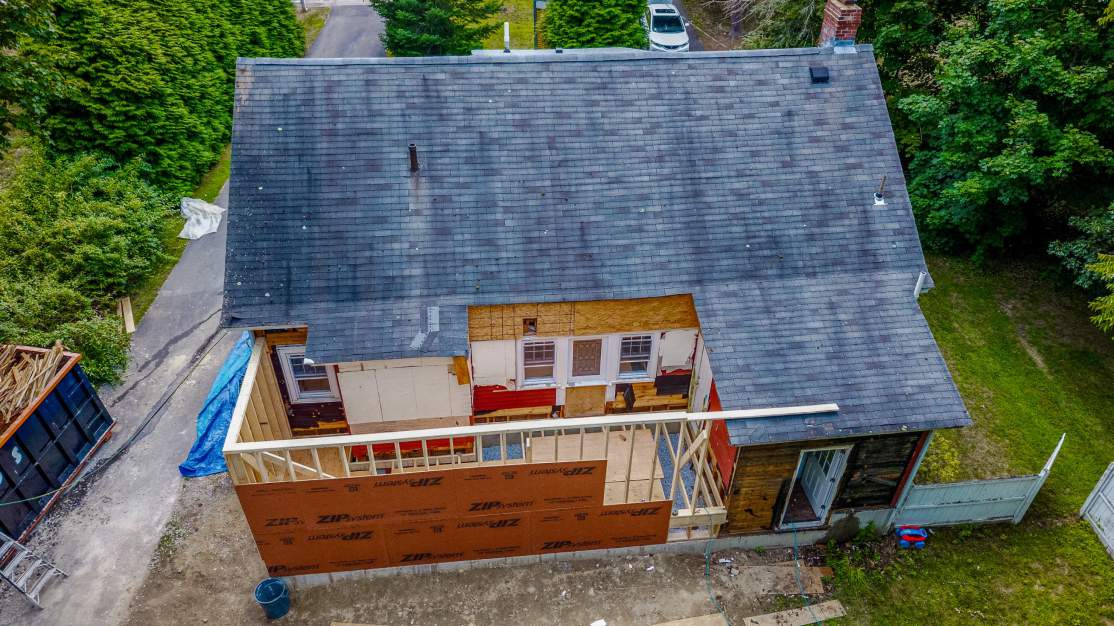
"Do I need a permit for this?" is one of the most common questions homeowners ask before starting a renovation — and one of the most important to get right. Working without a required permit in Massachusetts can affect your homeowner's insurance, create complications when you sell, and result in mandatory tear-down of unpermitted work. Here's what you need to know.
When Do You Need a Building Permit in Massachusetts?
The short rule: if it's structural, electrical, plumbing, or mechanical, you need a permit. The longer rule requires looking at your specific project.
| Project | Permit Required? | Notes |
|---|---|---|
| Kitchen remodel (cosmetic only) | Usually No | New cabinets, countertops, paint, hardware — no structural, plumbing, or electrical changes |
| Kitchen remodel with plumbing or electrical | Yes | Moving a sink, adding a circuit — always requires permits |
| Bathroom remodel (tile, fixtures only) | Usually No | If plumbing locations don't change |
| Bathroom remodel with plumbing changes | Yes | Moving or adding plumbing requires permit |
| Deck (attached to home or over 30" high) | Yes | Nearly always required in MA and NH |
| Home addition | Yes | Always — structural, electrical, plumbing all involved |
| Finished basement | Yes | If electrical, plumbing, egress windows, or HVAC involved |
| Window or door replacement (same size) | Usually No | Check with your local building department |
| New construction | Yes | Always, multiple permit types required |
| HVAC replacement | Yes | Mechanical permit required in most municipalities |
How the Permit Process Works in Massachusetts
Step 1: Application
Submit a permit application to your local building department. Applications typically require a project description, scope of work, estimated value, and for structural projects, stamped architectural drawings. Most Massachusetts towns now accept applications online.
Step 2: Review
The building department reviews the application and submitted documents. They may request revisions or additional information. This is where many inexperienced contractors lose weeks — incomplete applications or drawings that don't meet code are sent back for revision.
Step 3: Permit Issued
Once approved, the permit is issued. Work can begin. The permit must be posted visibly at the job site.
Step 4: Inspections
Most projects require multiple inspections at specific phases — foundation, framing, rough electrical, rough plumbing, insulation, and final. Missing an inspection or failing to schedule one can halt the project or require demolition of completed work.
Step 5: Certificate of Occupancy
For additions and new construction, a Certificate of Occupancy (CO) is issued after the final inspection confirms the work meets code. This document is required for the space to be legally occupied.
Permit Timelines by Type of Town in Massachusetts
| Town Type | Typical Permit Timeline |
|---|---|
| Smaller towns (Carlisle, Shirley, Tyngsborough) | 1 to 3 weeks |
| Mid-size cities (Lowell, Chelmsford, Andover) | 2 to 4 weeks |
| Larger cities (Newton, Cambridge, Framingham) | 3 to 8 weeks |
| Projects requiring zoning review | Add 4 to 12 weeks |
What Happens If You Skip a Permit in Massachusetts?
Unpermitted work creates problems that compound over time. Your homeowner's insurance may deny claims for damage related to unpermitted work. When you sell your home, the buyer's inspector may flag unpermitted additions, triggering a requirement to either permit retroactively (which often means exposing completed work for inspection) or remove it. In some cases, the building department can require demolition.
We have seen clients inherit unpermitted work from previous owners that cost more to resolve than the original project. Permits are not bureaucratic obstacles — they're the documentation that protects your investment.
Why Work With a Contractor Who Handles Permits
At Lumi, we manage every permit for every project we take on. We know the building departments in every city and town we serve, we know the submittal requirements, and we know the inspectors. Our 100% permit approval rate on first submission is not luck — it's preparation and experience.
You should never have to set foot in city hall on a project we're managing. That's part of what you're hiring us for.
Frequently Asked Questions
How much does a building permit cost in Massachusetts?
Permit fees in Massachusetts are calculated as a percentage of project value, typically 0.5 to 1.5 percent. A $50,000 kitchen remodel might carry a permit fee of $500 to $750. Larger projects like additions run $1,000 to $2,500. We include permit fees in our project estimates.
Can I pull my own permit in Massachusetts?
Homeowners can pull permits for work on their primary residence in Massachusetts. However, licensed contractors must pull permits for electrical and plumbing work in most cases. Pulling your own permit when using a contractor may also void the contractor's warranty and insurance coverage on the work.
What if my project was done without a permit?
Retroactive permitting is possible in most Massachusetts towns but requires exposing completed work for inspection. The building department will assess whether the work meets current code. In some cases, corrections are required before the permit can be closed. We handle retroactive permit situations — contact us to discuss your specific circumstances.